Theme of Saints
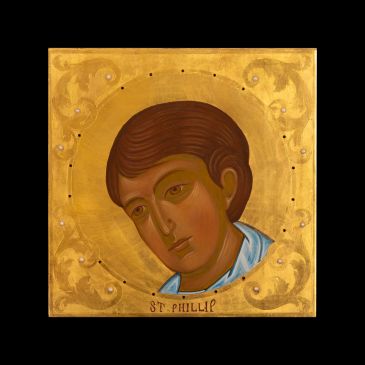
St. Philip
St. Roman the Melodist
St. Roman the Melodist
About the Icon:
Origin: Greek Byzantine tradition
Date: 2009
Medium: Egg tempera and gold on a prepared wood panel with Swarovski crystals and flat backed pearls.
12" x 12"
Description: One of Christ’s first disciples, St. Philip answered the Lord’s call without hesitation and invited others to follow Him. His life is a witness to faithful discipleship and joyful evangelization.
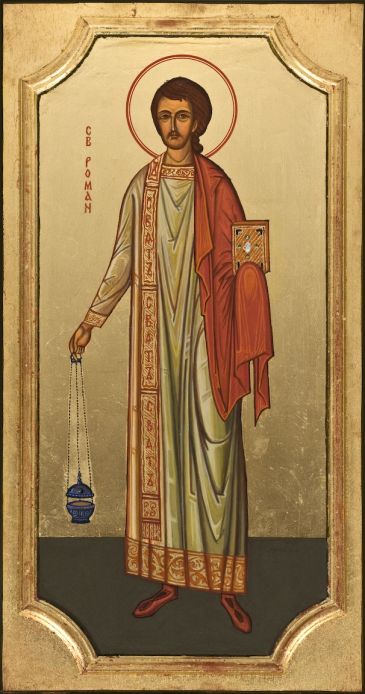
St. Roman the Melodist
St. Roman the Melodist
St. Roman the Melodist
About the Icon:
Original: 6th century prototype
Date: 2007
Description: St. Roman is a Greek hymn-writer who had a thousand compositions attributed to his name. In his left hand he holds a gilded Gospel and in his right hand a traditional incense burner, both items significant in the liturgy and the latter characterizing our prayers directe
About the Icon:
Original: 6th century prototype
Date: 2007
Description: St. Roman is a Greek hymn-writer who had a thousand compositions attributed to his name. In his left hand he holds a gilded Gospel and in his right hand a traditional incense burner, both items significant in the liturgy and the latter characterizing our prayers directed to God. His feast day is Oct. 1st along with the feast of the Protection of the Mother of God.
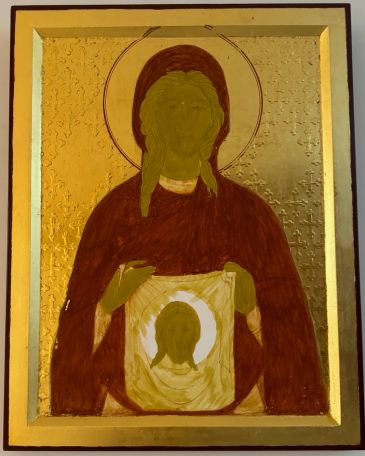
St. Veronica
St. Roman the Melodist
About the Icon:
Origin: Greek Byzantine tradition
Date: In progress
Medium: Egg tempera and gold on a prepared wood panel.
16.5" x 21"
Description: Tradition remembers St. Veronica for compassionately wiping the face of Christ on His journey to Calvary. Her icon honours the quiet power of mercy and the dignity found in serving those who suffer.

St. Catharine of Alexandria
About the Icon:
Origin: Victor of Crete, 17th century prototype
Date: 2007
Medium: Egg tempera and gold on prepared wood panel with Swarovski crystals, flat backed pearls, seed pearls & sapphires
21" x 27"
Description: A noble woman of Alexandria who lived in Egypt in the 3rd and 4th century. She wears royal garments, adorned with a crown and
About the Icon:
Origin: Victor of Crete, 17th century prototype
Date: 2007
Medium: Egg tempera and gold on prepared wood panel with Swarovski crystals, flat backed pearls, seed pearls & sapphires
21" x 27"
Description: A noble woman of Alexandria who lived in Egypt in the 3rd and 4th century. She wears royal garments, adorned with a crown and precious stones. Her hair is caught up in decorative snood. Catherine was martyred on a spiked wheel at the age of 18 and her feast day is celebrated on Nov. 25th. She is the patroness of students and philosophers. She holds a cross of martyrdom and there are books representing knowledge and scientific instruments like a compass and calendar surrounding her. She sits at a desk with Allegories of the Virtues for example Prudence, Justice, Temperance & Fortitude shown on the surfaces. These are personifications of the virtues that Catherine possessed.
Sts. Boris and Hlib - Passion Bearers of Kyivan Rus'
About the Icon:
Origin: Kyivan Rus', 11th - 12th century style
Medium: Egg tempera, gold & aluminum on prepared wood panel
Description: Princes Boris and Hlib, sons of Saint Vladimir, were among the first saints canonized in Kievan Rus'. They accepted death without resistance to preserve peace, embodying a Christ-like manner, without violen
About the Icon:
Origin: Kyivan Rus', 11th - 12th century style
Medium: Egg tempera, gold & aluminum on prepared wood panel
Description: Princes Boris and Hlib, sons of Saint Vladimir, were among the first saints canonized in Kievan Rus'. They accepted death without resistance to preserve peace, embodying a Christ-like manner, without violence, hatred, or revenge. Christs' hand shown above them in a mandorla, blessing them. Generously Sponsored by Eugun and Maria Rypan

St. George the Great Martyr - The Victory-Bearer
St. George the Great Martyr - The Victory-Bearer
St. George the Great Martyr - The Victory-Bearer
About the Icon:
Origin: Byzantium, 14th century style
Medium: Egg tempera, gold & aluminum on prepared wood panel
32" x 38"
Description: Saint George, the soldier-martyr of Cappadocia, is venerated as a model of courage and faith. His slaying of the dragon symbolizes Christ's triumph over evil. He is portrayed on horseback, spearing the dr
About the Icon:
Origin: Byzantium, 14th century style
Medium: Egg tempera, gold & aluminum on prepared wood panel
32" x 38"
Description: Saint George, the soldier-martyr of Cappadocia, is venerated as a model of courage and faith. His slaying of the dragon symbolizes Christ's triumph over evil. He is portrayed on horseback, spearing the dragon with a very delicate spear. Christ's hand shown above in a mandorla, blesses him to show that it is not through his own power, but with the blessing of Christ that he is able to overcome evil.
St. Luke
St. George the Great Martyr - The Victory-Bearer
St. George the Great Martyr - The Victory-Bearer
About the Icon:
Origin: Greek Byzantine tradition
Date: 2025
Medium: Egg tempera and gold on a prepared wood panel.
22" x 26"
Description: Evangelist, physician, and companion of St. Paul, St. Luke is traditionally regarded as the first iconographer. His Gospel and artistic legacy proclaim Christ’s mercy through both word and sacred image.

Join Us
Help Our Cause
Your support and contributions will enable us to meet our goals and fund our mission.
-429c2b8.jpg/:/cr=t:4.55%25,l:0%25,w:100%25,h:90.91%25/rs=w:1200,h:545,cg:true)
Support from residents, families, and community partners helps sustain important projects across our Homes.
We invite you to be involved in ways
that feel meaningful to you.